In the intensely competitive world of modern pro-level oversteer competition, podium finishes is no longer solely a product of brute torque or behind-the-wheel aggression. Instead, it has become a complex discipline that requires a painstaking marriage of picking a time-tested car, arming it with the correct competition hardware, and, most critically, comprehending its real-time performance on the circuit through sophisticated suspension tuning applications. This definitive manual acts as your blueprint from the initial concept of a drift build through to the last engineering-refined refinements that elevate a capable machine into a consistent winner. We will examine in detail the precise engineering of vehicle alignment optimization, demonstrating how a modern drift tuning app like precise measurement hardware eradicates assumptions and provides exceptional clarity into your car's true dynamics.
The bedrock of any exceptional drift car is, indisputably, the platform itself. Certain vehicles have earned legendary standing within the worldwide oversteer scene due to their inherent handling characteristics, strong construction, and the immense ecosystem of specialist parts available. Selecting the correct platform is the primary and most significant decision a enthusiast will make. For instance, the the E36 generation BMW is widely regarded as perhaps the the finest all-around drift cars of all time. Its near-perfect 50/50 weight distribution, alongside a RWD setup and robust six-cylinder powerplants, creates a car that is simultaneously accessible for newcomers and highly effective in the hands of a expert driver. The successor of this philosophy, the BMW E46, refines these strengths with a increasingly refined structure, broader wheel track for improved confidence, and even a greater degree of turning capability straight from the manufacturer. A distinct formidable platform in the pro scene is the Chevrolet Corvette C6.
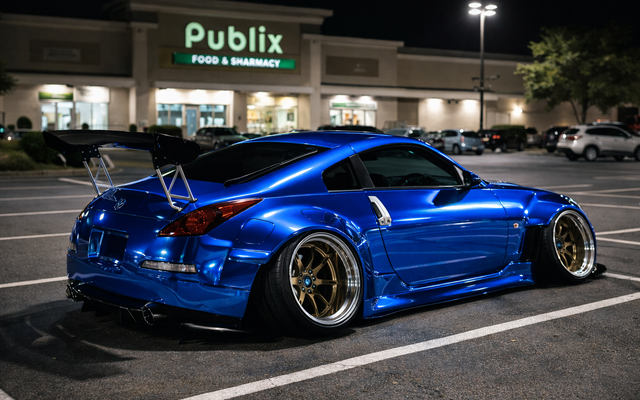
This V8-powered track weapon offers a unique array of benefits to the sideways world, including a low-mass aluminum chassis, a transaxle-style gearbox and differential unit that helps create an perfect weight distribution, and the immense low-end power of a big LS V8 motor. This fusion transforms it into an complete weapon on track, capable of initiating and maintaining long drifts with apparently easy use of power. For drivers desiring remarkable performance per dollar, the Nissan Z33 excels as a excellent candidate. It is delivered from the manufacturer with a robust body structure, a effective OEM LSD, and the free-revving VQ35DE engine that provides ample performance for practicing and moving up in the activity. Its newer version, the 370Z model, offers additional refinements in chassis stiffness, steering geometry, and peak engine output, solidifying its status as a favorite pick among professional drivers. Additional iconic cars that warrant mention encompass the nimble Wankel-engined FC generation RX-7, the ubiquitous Nissan S13, the V8-powered SN95 generation Mustang, the more recent BMW E90, and the compact yet surprisingly fun and forgiving MX-5 Miata. Each of these chassis offers a different palette of traits, challenges, and possibilities, but they all have in common the basic elements necessary to be transformed into a competitive sliding vehicle.
However, choosing the optimal car is merely the first step. To release the true capability of any of these cars, significant upgrades to the steering and chassis control systems are absolutely essential. This is where the domain of specialist aftermarket parts becomes critical importance. The single most impactful upgrade for a serious competition vehicle is the fitting of a drift-spec drift angle kit. These advanced kits, like those manufactured by specialist companies like specialist manufacturers, are designed to dramatically expand the vehicle's available lock-to-lock rotation. A factory production vehicle is highly limited in how far its steering tires can pivot, a design trade-off for public road operation. In drifting, but, maximum countersteering is continuously needed to catch and hold a drift. An angle kit substitutes the factory uprights, rod ends, and potentially control arms with parts that allow the steered wheels to achieve degrees of turn over 70 or even 80 degrees, versus a normal OEM angle of around 40 to 50 degrees.
This vastly expanded capability provides the pilot with dramatically more command during a slide, enabling it to be considerably easier to start a oversteer moment, hold it through a sweeping bend, and change fluidly from one direction to another. The difference in drivability is nothing short of revolutionary. Paired with a properly specified steering kit is the every bit as vital enhancement to the chassis's spring and damper setup. Generic or even expensive road adjustable suspension are just not engineered for the particular and harsh demands of sliding. A purpose-built set of adjustable dampers is paramount. These specialized suspension components have specific valving and spring rates that are optimized for the violent weight transfer that is typical of sliding. When a pilot initiates a angle, the car's mass is shifted rapidly to the outside of the bend. Correct drift-spec suspension control this transfer in a controllable manner, permitting the car to settle promptly and providing the driver precise feel through the steering wheel and cockpit. They additionally allow for exact adjustment of stance, rebound and compression rate, and cross-weight, which are all integral aspects of fine-tuning the car's handling to a particular track or piloting approach. In combination, a high-quality steering angle kit and a properly selected pair of competition suspension units form the undeniable physical cornerstone upon which all later refinement is built.
Once the fundamental parts is installed, the subsequent vital phase in the project is the detailed adjustment of the car's alignment. This is the domain of car suspension tuning, a process that can appear overwhelmingly complex to the uninitiated but is, in fact, the defining factor to transforming a collection of high-performance pieces into a cohesive and predictable whole. The most debated parameter of tuning for drifting is certainly camber angle. Wheel camber is the angle of the tire relative to the upright plane when looked at from the forward of the car. When the top edge of the wheel is tilted inward, this is known as camber-in. In oversteer driving, inward-leaning wheels on the front wheels is universally employed and is considered essential. The reason is fundamentally tied to vehicle dynamics.
When a car is turning at high slip angles, the chassis leans towards the outer of the corner. This chassis roll makes the outside front tire to lose its optimal contact patch with the tarmac. By introducing negative camber, the wheel is pre-leaned to account for this lean. As the vehicle rolls into the turn, the tire gains a better contact patch with the asphalt, increasing its traction at the precise moment when it is absolutely essential for directional command. Commonly, front axle angles for a dedicated sliding vehicle fall between approximately -3 degrees to as high as -5 degrees or even more, depending on the details of the vehicle geometry, compound choice, and driver preference. The rear wheels also utilize negative camber, but the settings are usually less and less aggressive than the front. Excessive camber at the back can cause the vehicle to overly prone to oversteer and challenging to control on acceleration use, as it reduces the available contact patch of the driven wheels during straight-line throttle application. Therefore, rear axle angles are often in the ballpark of -1 degree to -3 degrees, striking a precise balance between giving sufficient lateral bite to assist in entering and maintaining the angle while also keeping good hook-up for acceleration the bend. camber angle is merely one element of the more complex alignment puzzle, which also encompasses toe, caster angle, and bump steer adjustment.
Toe setting refers to the orientation of the wheels as seen from a bird's-eye view. Toe-in means the leading edges of the tires are closer together than the rear edges, while negative toe means the reverse. For oversteer, a small amount of front negative toe is often employed to improve the initial handling feel, making the car feel more agile and willing to begin a slide. Rear toe setting is generally set to zero or a very small amount of positive toe to foster stability under power. self-centering is the longitudinal or rearward tilt of the kingpin axis when looked at from the lateral of the car. Increased caster angle enhances steering feel and high-speed confidence, and it additionally boosts camber effect during steering, which is extremely beneficial. Adjusting these parameters is a intricate interaction where a modification to a single value can and often will affect the others. The traditional method for dialing in a vehicle's suspension geometry for competition has historically been a tedious affair of guesswork and adjustment. A pilot or team would make a adjustment based on a hunch, drive the car on track, depend on the operator's individual perception and impressions, and then apply a further suspension engineering change. This loop would continue over and over until the car felt "good" or the scheduled practice period ended. This system is not just extremely inefficient in terms of time and costs, but it is furthermore inherently inaccurate.
Human sensation is a notoriously unreliable measurement tool, affected by numerous factors such as fatigue, changing track grip levels, weather, and just the mindset of the driver on that particular run. What feels "tail-happy" on one run might feel "understeery" on the subsequent pass, resulting in confusing feedback and frustrating tweaks. This long-standing challenge in chassis setup is exactly where modern telemetry systems has intervened to revolutionize the process.
The rise and adoption of advanced drift telemetry software has introduced a completely new era for engineering and optimizing professional drift cars. This new generation of tools, exemplified by innovative solutions like GripDial, work by physically recording the live dynamic movement of the vehicle as it is piloted on the track. As opposed to relying on personal feedback, these systems gather measurable data on critical parameters such as shock absorber movement, individual tire rotation, acceleration forces, wheel angle, and driver input application. This collected telemetry is then processed by advanced applications that can plot and analyze the metrics in a actionable manner. For the very first time, drivers and builders can see precisely what the chassis is doing at each point of a slide. This capability changes the complete suspension tuning procedure. Think about the particular goal of setting the front axle negative camber for a particular chassis. As an alternative to introducing a modification from -3 degrees to -3.5 degrees and then driving multiple laps to try and "feel" a difference, a vehicle dynamics suspension tuning tool tool can deliver instant and clear data. The application can display visually how the wheel's grip is performing during the most important stages of a slide: turn-in, sustain, and transition. It can demonstrate if the current camber setting is allowing the outside front tire to achieve ideal loading or if the rubber is over-stressed on its outside edge.
The system can subsequently make data-driven recommendations for modification. Perhaps the information indicates that the tire is still overloading its sidewall at -3.5 degrees of negative camber, indicating that even more negative camber, say -4 degrees, might be warranted. Alternatively, the data might show that the tread is failing to reaching temperature or that the inside edge is wearing unevenly, which could point to that there is excessive negative camber and a modest decrease back to drift suspension tuning guide -3.2 degrees would be more efficient. This degree of accuracy and actionable analysis was literally unimaginable in the time of exclusively manual adjustment.
The effect of utilizing a dedicated suspension tuning tool extends much further than just setting camber angles. It becomes an essential suspension tuning guide that is specific to your specific car. When fine-tuning the damping clickers on your coilovers, rather than relying on general advice or mimicking another driver's settings, you can use the data to see how the car is performing in relation to your tweaks. The software can display the suspension travel path over a lap, highlighting if the dampers are managing the chassis motion properly or if they are causing the car to oscillate uncontrollably after a transition. It can assist in pinpointing issues like hitting the bump stops or excessive extension, enabling you to apply data-backed decisions to preload settings, rebound/compression rates, or ground clearance. This methodology extends equally to the intricate process of corner balancing. Beyond camber, the tool can give analysis into how changes to toe and caster are impacting the chassis's handling during specific maneuvers of a drift. For instance, it can allow you to determine the optimal amount of front toe out for your particular angle kit configuration and competition technique by showing the response time of turn-in response and the stability of the vehicle at maximum countersteer. This makes the system an extremely useful vehicle dynamics manual that is constantly updated by the actual dynamics of your personal chassis on the circuit. It elevates the complete endeavor from a dark art into a methodical development process.
Furthermore, the value of a platform like data acquisition is not restricted to professional engineers with vast budgets. For the grassroots enthusiast, it serves as an powerful equalizer. It in essence gives the driver with the analysis of a expert race engineer without needing the typical overhead. It drastically shortens the tuning process by delivering definitive solutions to problems that would traditionally take years of experience to understand. A tuner can understand how their specific chassis behaves to various adjustments, building a more intuitive comprehension of vehicle dynamics in the process. It additionally democratizes high-level performance tuning concepts, permitting all drivers with the ambition to refine their vehicle to achieve it in a systematic and successful fashion. This is especially important in a activity like sliding, where engineering know-how has historically been a highly secretive asset among top crews. Today, that power can be in the hands of every dedicated builder.
In conclusion, the path to building and dialing in the ultimate championship-contending drift car is a multi-faceted endeavor that perfectly combines classic engineering principles with revolutionary telemetry technology. It starts with the informed selection of a proven platform, then built upon the installation of essential competition components like high-performance angle modification systems and correctly selected drift-spec adjustable dampers. The journey then moves into the detailed phase of chassis dynamics adjustment, where parameters like camber angle, toe setting, and caster angle are meticulously adjusted to suit the car's upgraded capabilities and the pilot's personal style. Finally, and what genuinely distinguishes the today's process from the traditional methods, is the integration of a sophisticated vehicle dynamics tool. This system eradicates the approximation and inefficiency of purely feel-based tuning by delivering empirical, real-time information on how the chassis is really performing. It functions as an incredible suspension tuning tool, a definitive drift suspension tuning guide, and a master performance analyzer. In unison, this integrated approach guarantees that each and every aspect of the drift car—from the selection of the chassis to the final tweak on the suspension—is perfected for peak competitiveness on the circuit. It represents the full progression of the art of oversteer driving, merging physical driving skill with precise vehicle setup to forge the ultimate effective machines attainable.